Dry needling vs acupuncture: what is the difference?
Dry needling and acupuncture look identical from the treatment table: the same very fine needles, often in similar spots. The thinking behind each needle is where they part ways. Here is an honest comparison from the clinic behind the @thedryneedlingphysio education channels, with no point scoring against either profession.
By Andrew Ellis, AHPRA registered physiotherapist · July 2026
The short version
- The needles are identical, the thinking behind each one is not
- Dry needling targets the trigger point a physical assessment finds is driving your pain
- Acupuncture places needles at points along the meridians described by that tradition
- Both pathways are regulated in Australia, and either needle belongs in a plan with an end point
The short answer
Dry needling and acupuncture use the same very fine, single use sterile needles, but they come from two different frameworks. Acupuncture is part of traditional Chinese medicine and places needles at points along the meridians described by that tradition. Dry needling is a western, anatomy based technique: the needle goes into a trigger point, the tight, irritable band of muscle that a physical assessment identifies as the driver of your pain.
In practical terms, choose dry needling if you want a specific muscle problem treated inside a physiotherapy plan with strengthening and an end point, and choose acupuncture if you want a whole system approach grounded in Chinese medicine from a registered acupuncturist. Both pathways are regulated in Australia, and from the outside the two techniques can look almost identical.
Which one fits you
Choose dry needling
You want a specific muscle problem treated inside a physiotherapy plan, with strengthening and an end point.
Choose acupuncture
You want a whole system approach grounded in Chinese medicine, from a registered acupuncturist.
Same needles, two different maps
Acupuncture has been practised for thousands of years and works from the traditional Chinese medicine map of the body: meridians, points and the flow along them. The practitioner selects points according to that system, often across several body regions, and the needles are typically placed gently and left in position for a period.
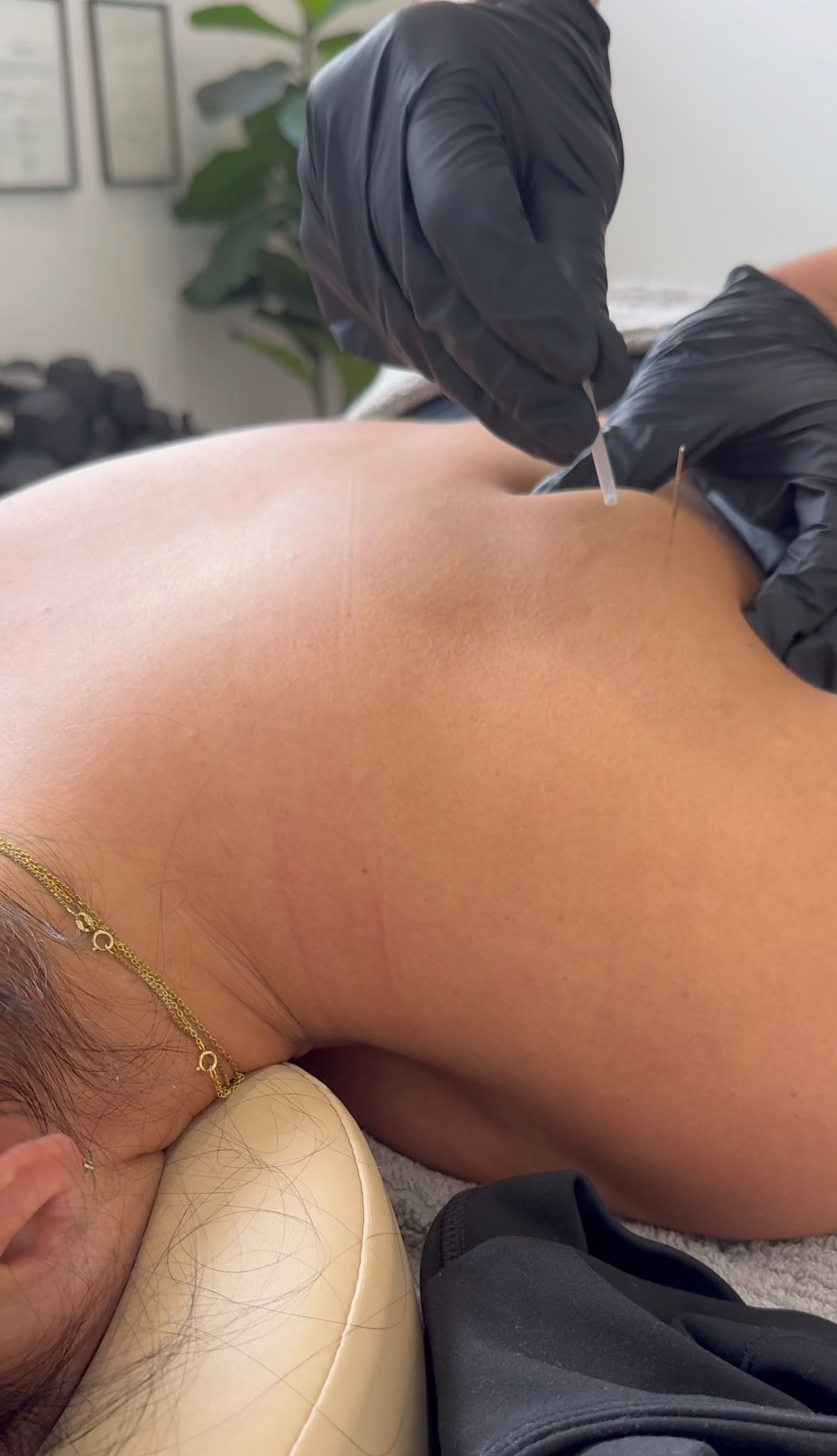
Dry needling grew out of twentieth century western research into myofascial trigger points. There is no meridian map. The target is found by hand: the practitioner palpates the muscle, locates the taut band that reproduces your pain, and needles that exact spot, usually aiming for a local twitch response, the brief involuntary flicker that helps release the tension. It is called dry because nothing is injected.
The overlap is real. Many classic acupuncture points sit close to common trigger point locations, so two practitioners from two traditions can put a needle in almost the same place for entirely different stated reasons. That overlap is a big part of why the two techniques are so often confused.
- Palpate the muscle
- Locate the taut band
- Needle that exact spot
- Usually a local twitch
What each is used for, and how to read the evidence
Dry needling is most often used for muscle driven pain: stubborn neck and shoulder tension, headaches with a muscular driver, buttock and hip pain that mimics sciatica, tennis elbow, calf and shin problems, and the muscle guarding that comes with chronic pain. It is most useful as a window opener: needling can reduce pain and free up movement, and the strengthening and load changes that follow are what help the improvement last.
Acupuncture is used within Chinese medicine for a broad range of concerns, with musculoskeletal pain among the most common reasons Australians seek it. Some GPs and physiotherapists also train in acupuncture alongside their primary profession, which blurs the boundary even further in practice.
What guidelines support
On evidence, honesty beats point scoring. Research on both techniques is active, findings vary by condition, and neither has a blank cheque. What modern clinical guidelines consistently support is active care: whichever needle you choose, it should sit inside a plan that restores movement and builds strength, not be repeated indefinitely on its own. A practitioner in either tradition who pairs needling with active rehabilitation and a clear end point is treating you well.
Active care matters
Needling can open a window of less pain and better movement. Strengthening is what makes it last. Ask what the rest of the plan looks like.
What a dry needling session at PACT looks like
Assessment comes first, always. We take your history, examine the area, and confirm the trigger point actually reproduces your pain before any needle comes out. You get a plain explanation of what we found, what the needle is expected to do, and the risks for your particular case, and treatment only proceeds with your consent.
What it feels like
The needling itself is quick. Insertion is usually barely felt. When the needle finds the trigger point you feel a short, deep ache or cramp and often the twitch response, which is odd the first time but over quickly. Afterwards the muscle commonly feels heavy for a few hours to a day, like it has been worked hard, then noticeably looser.
Needling at PACT almost never travels alone. It can open a window of reduced pain and better movement, and we use that window for hands on treatment, strengthening and load changes in the same session. For the full walkthrough of what a trigger point is and when needling is the right tool, read our guide, dry needling explained.
Who should choose which
Start with the problem, not the tool. If your pain has a clear muscular driver, you want it diagnosed and fixed rather than maintained, and you like the idea of treatment feeding into strengthening and a return to normal load, dry needling within physiotherapy is the natural fit. That includes work injuries, where the needling sits inside the capacity reporting and return to work planning a claim runs on.
If you value the traditional Chinese medicine framework, want a whole system approach, or have had good results with acupuncture before, see a registered acupuncturist. That is a legitimate, regulated choice, and nothing in this guide argues against it.
If you are not sure, ask either practitioner the same three questions: what do you think is wrong, what will the needle achieve, and what does the rest of the plan look like. Good practitioners in both traditions answer those happily, and our guide on choosing a physiotherapist covers what good answers sound like.
- Specific muscle driven pain with a plan and an end point: dry needling
- Whole system traditional Chinese medicine approach: registered acupuncturist
- Work injury with reporting and return to work planning: physiotherapy led care
- Not sure: ask both the same questions and compare the answers
Safety and regulation in Australia
Both pathways are regulated. Physiotherapists are registered with AHPRA, and dry needling is delivered by physiotherapists and some other registered health professionals who have completed appropriate training in the technique. The title acupuncturist is protected under national law: anyone using it must be registered with the Chinese Medicine Board through AHPRA. You can check any practitioner on the public register at ahpra.gov.au for free.
Safety in practice
In competent hands both techniques have a strong safety record. Single use sterile needles are standard, every patient should be screened first, and some regions deserve particular care: the area over the ribcage and around the shoulder blades sits close to the lung, so it demands respect for the anatomy, adjusted needle length and angle, and the judgement to skip needling when it is not clearly indicated. A cautious practitioner in that region is showing skill, not a lack of it.
At PACT, trigger point dry needling has been part of Andrew Ellis's clinical practice since 2012. He founded and hosted World Health Webinars, an online education platform that delivered courses to more than 5,000 clinicians across 14 countries, and he runs the @thedryneedlingphysio channels with a community of more than 13,000 followers. The techniques you see there are the ones used on the treatment table in Miranda.
- Needling in clinical practice
- Since 2012
- Clinicians reached by courses
- 5,000+
PACT Physio & Rehab
Good to know before you book
Is dry needling just acupuncture with a different name?
Which is better for muscle and joint pain?
Does dry needling hurt more than acupuncture?
Who can provide dry needling and acupuncture in Australia?
Can I claim dry needling on private health extras or a workers comp claim?
Can I have dry needling and acupuncture at the same time?
This guide is general information, not a diagnosis or a substitute for an assessment. If you are concerned about your symptoms, book an appointment or see your GP.
See what people say on Google
We let our patients speak for themselves, on Google, where you can read it independently.
Read our Google reviewsWant an answer about your pain?
Same day appointments often available at our Miranda clinic, or by telehealth across Australia.