
Why home exercise programs fail, and how to make yours stick
Physiotherapy has a quiet secret: the home exercise program is the backbone of most treatment plans, and it is also the part most likely to be abandoned by week three. If your program has fizzled, you have not failed some test of willpower. In most cases the program failed you: too big, too vague, or too disconnected from your actual life. Here is an honest look at why home programs collapse, and how to rebuild yours into something that survives contact with a normal week.
By Andrew Ellis, AHPRA registered physiotherapist · September 2026
The short version
- Research estimates around half of people do not complete their program as prescribed
- The usual problem is the program itself, not your willpower
- Two to four exercises you will actually do beat the full program you will not
- Attach each exercise to a cue already in your day
The short answer
Research on rehabilitation has estimated for years that around half of people, and by some estimates more, do not complete their home exercise programs as prescribed. That is not a character flaw spread across half the population. When a treatment is abandoned that often, the sensible conclusion is that the standard way of prescribing it has problems: too many exercises, no clear reason for doing them, no plan for the sore days, and no anchor in daily life.
The fix is rarely more discipline. It is a smaller, clearer program tied to a goal you actually care about, attached to a routine you already have, with agreed rules for the days it hurts and someone checking in on how it is going. Every one of those pieces is buildable, and most of them take minutes.
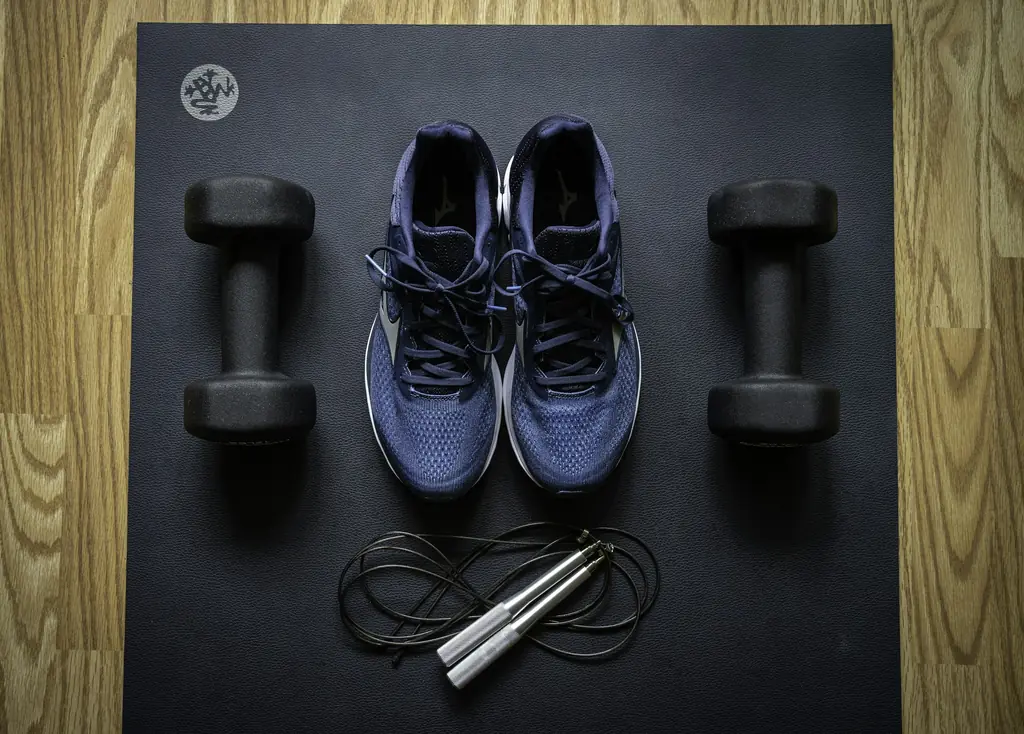
Why home exercise programs really fail
Where home programs come apart
| Failure point | What it looks like |
|---|---|
| Too big | Eight exercises at three sets, close to an hour |
| No clear why | The exercise buys you nothing you can name |
| Soreness not explained | You stop to be safe |
| No routine anchor | It relies on remembering |
| Nothing changes | Same sheet, no progression, no feedback |
The most common failure point is size. A sheet of eight exercises at three sets each is close to an hour of daily rehab, prescribed to a person with a job, a family and a painful body. It gets done for a week out of politeness, then reality wins. The evidence points the other way: fewer exercises with a clear purpose are far more likely to get done, and a small program done consistently will usually move you further than an ambitious one done rarely.
The second is a missing why. If you do not know what an exercise is buying you, it becomes a chore, and chores lose to everything. Compare doing your calf raises because the sheet says so, with doing them because they are the specific bridge back to running with your kids. Same exercise, entirely different survival odds.
No rules, no routine
Then come the quiet failures. Soreness arrives and nobody told you which soreness is acceptable, so you stop to be safe. The program floats free of any routine, so it relies on remembering, and remembering loses to a busy Tuesday. And nothing changes for weeks: the same sheet, no progression, no feedback, no evidence you are getting anywhere. Nobody sticks at something that feels pointless.
What the evidence says actually helps
Adherence has been studied heavily, and the honest summary is that no single trick fixes it. What the research supports is a stack of small strategies: programs kept deliberately short, goals set around activities that matter to the person, exercises tied to existing daily routines, simple tracking the person can see, clear rules for pain, and regular follow up with the clinician who prescribed it. Each one helps a little. Together they change the odds meaningfully.
Habit beats motivation
Habit research adds a useful frame: repeating a behaviour in a stable context is what makes it automatic. In plain terms, doing your program at the same cue every day, after brushing your teeth, while the kettle boils, before the shower, matters more than doing it perfectly. Motivation rises and falls. A cue that already lives in your day does not care how motivated you are.
And support matters more than most people expect. Programs with scheduled reviews, technique checks and planned progressions get done at much higher rates than a sheet handed over at the last appointment with a cheery good luck. Part of what you are paying a physiotherapist for is not the sheet. It is the follow through.
Rebuilding yours so it sticks
Rebuilding it in three moves
- Shrink itAsk your physio: if I only did three things, which three
- Attach a cueDo it at a cue already in your day, like while the kettle boils
- Set a floorOne set of one exercise still counts
Shrink it, honestly. Ask your physio the direct question: if I only did three things, which three? A program of two to four exercises you will actually do beats the comprehensive version you will not. Then attach each one to a cue that already exists in your day, and put the equipment where the cue happens: the band hanging by the kettle, the mat where you make your coffee.
The rubbish day plan
Set the floor as well as the target. On a normal day you do the full dose. On a rubbish day you do one set of one exercise, and that still counts, because it keeps the habit alive, and the habit is the asset. Track it somewhere visible: a cross on the calendar, a note on the fridge, an app if you like them. The record is not for your physio. It is proof to yourself that you are the kind of person who does their rehab.
Finally, agree on the pain rules before you leave the appointment. A common approach is a simple traffic light: mild discomfort that settles within about a day is generally acceptable, moderate pain means trim the dose, and sharp or worsening pain means stop that exercise and check in. Your physio should set your specific limits, because they differ by condition and by person.
- MildSettles within about a day, generally acceptable
- ModerateTrim the dose
- Sharp or worseningStop that exercise and check in

Where telehealth earns its keep
A home program is the one part of physiotherapy that always happens at home, which is exactly where telehealth works. In a PACT Virtual Care session your program is built in the space where you will actually do it, using your real stairs, bench and furniture, with your technique watched live on camera and corrected as you go. There is no translation step between the clinic version of an exercise and the home version, because there is only the home version.
It also makes the follow through practical. Reviews happen without travel, so progressions happen on time instead of when you can next get to a clinic, and problems get caught in days rather than discovered at a six week review. For injured workers and motor accident clients across NSW, approved telehealth physiotherapy on an accepted claim is billed directly to the insurer, so distance and cost stop being reasons a rehab program quietly dies. If your program has stalled, whether you are in Miranda or five hundred kilometres from it, we can help you rebuild it into one that fits your life.
If yours has stalled
Ask for a video review and rebuild the program in the room where you use it. A PACT Virtual Care session uses your own stairs, bench and furniture. Reviews happen without travel, so progressions are easier to keep on schedule.
Good to know before you book
How many exercises should a home program have?
Should my exercises hurt?
I stopped my program weeks ago. Should I start where I left off?
How long before home exercises make a difference?
Can a physio really check my exercise technique over video?
This guide is general information, not a diagnosis or a substitute for an assessment. If you are concerned about your symptoms, book an appointment or see your GP.
See what people say on Google
We let our patients speak for themselves, on Google, where you can read it independently.
Read our Google reviewsWant an answer about your pain?
Same day appointments often available at our Miranda clinic, or by telehealth across Australia.